
The question of authority lies at the heart of the Christian faith. It is not enough to affirm that Holy Scripture is true, inspired, or even infallible. The real question is whether Scripture binds the conscience.
“The authority of Scripture is not theoretical—it binds the conscience.”
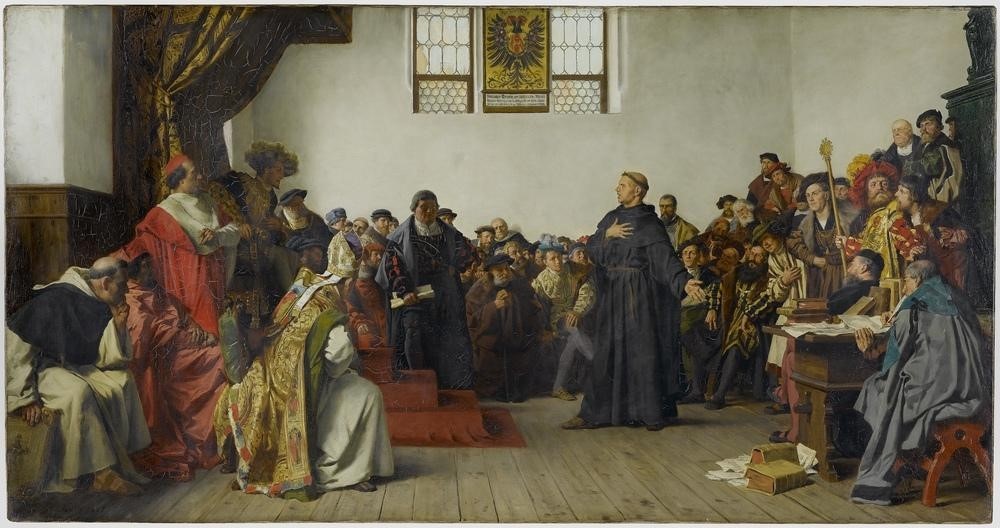
This was not merely a doctrinal formulation for the Reformers; it was a lived conviction. When Martin Luther stood before the imperial authorities at Worms in 1521, he did not appeal to tradition, ecclesiastical power, or personal insight. His now-famous words expressed the essence of Protestant conviction:
“My conscience is captive to the Word of God… I cannot and will not recant anything, since it is neither safe nor right to go against conscience.”
This statement was not an appeal to private judgment, but to a conscience bound by divine revelation. Scripture, as the Word of God, does not merely inform—it commands, governs, and judges.
Scripture as the Final Authority
The Bible consistently presents itself as the ultimate authority over belief and life. The Apostle Paul writes:
“All Scripture is given by inspiration of God, and is profitable for doctrine, for reproof, for correction, for instruction in righteousness.” (2 Timothy 3:16)
Scripture is not one authority among many; it is the authority by which all others are tested. This principle was later summarised in the Reformation doctrine of Sola Scriptura—Scripture alone.
Yet this principle is often misunderstood. To affirm Scripture as the highest authority in theory, while allowing other influences—culture, tradition, or personal preference—to govern interpretation and application, is to undermine its authority in practice.
“When Scripture is softened, truth is already being abandoned.”
The danger is rarely open denial. More often, it is subtle adjustment: difficult doctrines are reinterpreted, offensive truths are muted, and the sharp edges of biblical teaching are gradually worn down. In such cases, Scripture is no longer allowed to speak with its own voice.
The Captive Conscience
The Reformers insisted that the authority of Scripture is realised most clearly in its effect upon the conscience. The conscience is not autonomous; it must be formed, corrected, and bound by the Word of God.
“The Reformers did not interpret Scripture through history—their conscience was captive to it.”
This stands in contrast to approaches that place human reasoning, historical reconstruction, or cultural sensibilities as the controlling framework for interpreting Scripture. As the Dutch theologian Herman Bavinck warned:
“Anyone who makes his doctrine of Scripture dependent upon the historical examination of its formation… does not stand in the attitude of faith to Scripture.”
To subject Scripture to external authorities is to reverse the proper order. Scripture must interpret us before we attempt to interpret it.
The Word That Judges
The Word of God is not passive. It is active, penetrating, and authoritative. The writer to the Hebrews declares:
“For the word of God is living and powerful, and sharper than any two-edged sword… and is a discerner of the thoughts and intents of the heart.” (Hebrews 4:12)
This means that Scripture does not merely provide information—it exposes, judges, and transforms. It addresses not only what we believe, but who we are.
To stand under Scripture is therefore a humbling experience. It confronts pride, corrects error, and calls for repentance. It demands not only agreement, but submission.
Obeying God Rather Than Men
When the authority of Scripture is truly recognised, it inevitably creates tension with competing authorities. The apostles themselves declared:
“We ought to obey God rather than men.” (Acts 5:29)
This principle has echoed throughout church history, from the early church to the Reformation and beyond. Wherever Scripture binds the conscience, it sets limits on all human authority—whether ecclesiastical or civil.
This does not lead to disorder, but to proper order. For when God’s Word governs the conscience, the believer is freed from the tyranny of human opinion and grounded in divine truth.
Conclusion
The doctrine of Scripture is not merely a point of theology—it is a matter of obedience. The question is not simply:
Do we believe the Bible is true?
But rather:
Are our consciences captive to it?
For where Scripture is truly authoritative, it will not remain theoretical. It will speak, command, and rule.
And where it is softened, adjusted, or subordinated, its authority—however loudly professed—has already begun to be abandoned